English
 Español
 عربى
عربى


Home / News / Industry News / Why Frequency Conversion Vacuum Tumblers Deliver Superior Meat Quality and Higher Processing Yield
Equipment Maintenance and Operational Longevity
Preventive Maintenance Protocols
Frequency conversion systems require systematic maintenance to maintain processing consistency and equipment reliability:
Weekly Maintenance Tasks:
- Clean drum interior and paddle surfaces after each production cycle to prevent bacterial contamination and protein residue accumulation
- Inspect gasket integrity and seal condition to maintain vacuum effectiveness
- Verify VFD motor operation across full frequency range to detect abnormal vibration or noise
Monthly Inspection Checklist:
- Test vacuum system performance and verify pressure regulation accuracy within specified parameters
- Inspect bearing condition and lubrication levels on motor assemblies
- Review electronic control system logs for any recorded error codes or operational irregularities
- Verify frequency conversion speed calibration across operational range
Quarterly Deep Maintenance:
- Professional inspection of drum welds and structural integrity by qualified technicians
- Comprehensive testing of all safety systems and emergency stop functionality
- Replacement of air filter elements in vacuum pump systems
- Calibration verification of temperature and pressure sensors
Material Selection for Extended Service Life
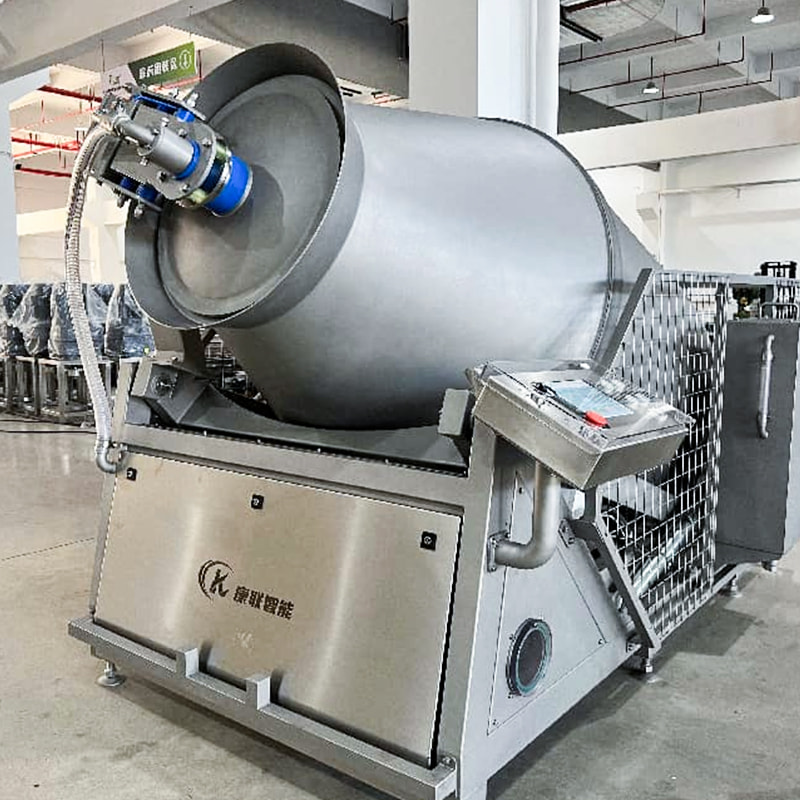
Full 304 stainless steel construction ensures equipment longevity in demanding food processing environments. Stainless steel offers superior corrosion resistance compared to alternative materials, particularly when processing acidic marinades, salt-heavy formulations, or extended vacuum cycles.
Welding techniques directly impact long-term reliability. Equipment manufactured with continuous TIG (Tungsten Inert Gas) welding creates stronger, more durable seams compared to spot welding or MIG processes. This construction standard supports extended equipment life spanning 10-15 years of continuous operation in commercial facilities.
Energy Optimization Through Frequency Management
Beyond yield improvements, frequency conversion delivers substantial energy cost reduction. Fixed-speed equipment operates at maximum motor load regardless of actual processing requirements, consuming 15-25 kW continuously. Variable frequency systems automatically modulate power consumption based on operational needs:
- Initial marination phases at 10-15 RPM consume 40-50% of peak power, reducing energy costs proportionally
- Intermittent processing patterns enable equipment shutdown during non-active cycles, eliminating standby energy consumption
- Soft-start frequency ramps reduce motor inrush current, extending motor lifespan and reducing electrical stress on facility infrastructure
- Annual energy savings of 30-40% compared to fixed-speed alternatives translate to 8,000-15,000 USD cost reduction for typical industrial processing facilities