English
 Español
 عربى
عربى
Home / News / Industry News / How Industrial Smokehouse Equipment Transforms Commercial Meat Processing Operations



Commercial meat processing demands equipment that combines precision, consistency, and efficiency. Modern industrial smokehouse systems have revolutionized how facilities handle large-scale production while maintaining product quality and food safety standards. The transition from traditional smoking methods to automated, temperature-controlled environments represents one of the most significant advances in meat processing technology over the past two decades.
Today's facilities face mounting pressure to increase output without compromising flavor, color uniformity, or nutritional value. Operators must contend with varying raw material characteristics, shifting consumer preferences for smoking profiles, and regulatory requirements that demand precise process documentation. Advanced smokehouse equipment addresses these challenges through intelligent design and automation capabilities that were unimaginable just years ago.
The heart of contemporary commercial smoking operations lies in the automatic smoke generator system. Unlike traditional methods requiring constant manual intervention, modern generators produce consistent smoke density and distribution throughout the cooking chamber. These systems operate by precisely controlling combustion parameters, ensuring that smoke penetration reaches every product without creating uneven coloring or inconsistent flavor absorption.
The smoke generation process employs controlled pyrolysis of hardwood materials, creating smoke at specific temperatures. Temperature management proves critical because excessive heat can damage product surfaces, while insufficient heat may not achieve proper smoke penetration. Integrated control systems monitor combustion air ratios, wood feed rates, and chamber temperatures in real time, making thousands of micro-adjustments to maintain ideal smoking conditions.
A circulating hot air smokehouse features internal circulation systems that distribute heat and smoke uniformly throughout the chamber. Internal fans with strategic placement ensure that products positioned anywhere within the smokehouse experience identical temperature and smoke exposure. This uniform distribution proves especially important for achieving consistent product appearance and smoking results across large batches.
The circulation design incorporates multiple air return pathways and outlet configurations. Products suspended at various heights within the chamber all receive equal heat penetration, preventing the common problem where lower-positioned items cook faster than those near the top. Advanced designs include baffles and diffusers that redirect airflow patterns, creating turbulent mixing that enhances smoke distribution efficiency.
Modern smokehouse equipment maintains precise environmental conditions through multi-zone temperature management. Each zone can be independently programmed to follow specific temperature curves throughout the smoking cycle. This capability allows operators to execute complex smoking programs that might involve initial low-temperature smoke phases, followed by gradual temperature increases for cooking, and finishing stages that achieve desired crust formation and color development.
Humidity control systems work in conjunction with temperature management, adjusting moisture levels to prevent surface case hardening while promoting proper moisture loss. Programmable logic controllers manage these parameters based on product type, batch size, and desired final characteristics. Data logging systems record all process parameters, creating permanent records for quality assurance and regulatory compliance documentation.
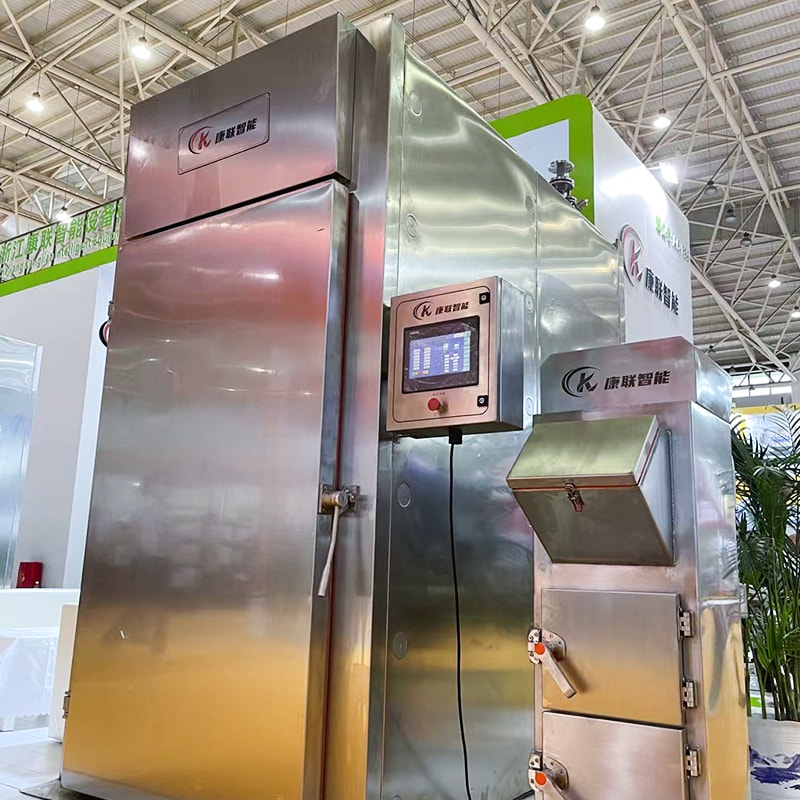
A stainless steel smokehouse provides superior performance compared to alternative materials through inherent corrosion resistance and durability. The harsh internal environment created by smoke, moisture, and cleaning processes demands materials that withstand corrosive conditions without degradation. Stainless steel construction ensures that equipment maintains structural integrity and aesthetic appearance throughout decades of continuous operation.
The most commonly employed material grade, 304 stainless steel, balances cost-effectiveness with excellent resistance to the smoking environment. Higher-grade materials like 316L stainless steel offer enhanced corrosion resistance for facilities located in coastal regions or areas with particularly aggressive atmospheric conditions. The investment in quality materials translates directly into extended equipment lifespan and reduced maintenance requirements over the equipment's operational life.
Interior surfaces require smooth finishes that facilitate cleaning while preventing smoke and grease accumulation. Polished or brushed stainless steel interiors meet these requirements while presenting a professional, hygienic appearance. The chamber design incorporates sloped floors with drainage systems for efficient moisture and condensate removal. Removable interior components enable thorough cleaning between production runs, preventing cross-contamination and maintaining food safety standards.
Modern industrial smokehouses employ advanced sealing systems that minimize smoke and heat escape while maintaining precise internal conditions. High-temperature gasket materials ensure long-term reliability without deterioration. Multi-layer insulation systems reduce energy consumption by maintaining stable internal temperatures despite external environmental fluctuations. The insulation thickness varies based on application requirements, with heavier insulation specified for facilities requiring minimal temperature fluctuations or operating in extreme climates.
One of the defining characteristics of leading manufacturing approaches involves recognizing that no single smokehouse design serves every facility equally well. A customized smoking oven approach allows operations to specify equipment precisely matched to their unique production requirements, product lines, and facility constraints.
Customization encompasses multiple dimensions of equipment design and functionality:
Sausage production imposes unique requirements on smoking equipment that differ substantially from whole muscle meat smoking. A uniform-color smokehouse for sausage processing must achieve consistent surface coloring across products that may have slight diameter variations. The cylindrical geometry of sausages creates different surface area to volume ratios than other meat products, requiring adjusted smoke exposure timing.
Sausage-specific designs often feature specialized loading systems that prevent product contact and ensure air circulation around each piece. The smoke concentration and temperature curves differ from those used for larger muscle cuts, necessitating equipment capable of executing these distinct production profiles. Rapid cooling stages help set the desired color and texture before products enter packaging operations.
Energy-efficient equipment represents not merely an environmental consideration but a significant operational expense factor for commercial facilities. Modern smokehouse systems incorporate multiple efficiency enhancements that reduce energy consumption without compromising product quality:
| Efficiency Feature | Typical Energy Savings | Implementation Approach |
|---|---|---|
| Advanced Insulation Systems | 20-30% heating reduction | Multi-layer insulation with vapor barriers |
| Optimized Air Circulation | 15-25% fan motor efficiency | Variable frequency drives and strategic fan placement |
| Heat Recovery Systems | 10-15% additional recovery | Exhaust heat recycling for preheating or facility heating |
| Demand-Based Smoke Generation | 12-18% fuel consumption reduction | Intelligent sensors controlling smoke generator operation |
Contemporary equipment incorporates sensors throughout the system that monitor operational parameters and equipment condition. This data enables predictive maintenance approaches that identify potential issues before equipment failure occurs. Operators receive alerts when components approach end-of-life conditions, allowing scheduled replacement during planned downtime rather than experiencing unexpected production interruptions.
Modern smokehouse systems include emissions control features that minimize environmental impact while meeting regulatory requirements. Afterburner systems can be integrated to reduce visible smoke emissions. Efficient combustion ensures complete fuel consumption, reducing harmful particulate release into the atmosphere. Water usage is minimized through optimized cooling system designs that recycle process water rather than requiring continuous fresh water supply.
Equipment capacity must align with facility production schedules and cold storage capabilities. Typical industrial installations range from 500 kilograms per cycle for smaller operations to 5,000 kilograms or more for high-volume producers. Cycle times vary based on product type and desired final characteristics, generally ranging from 4 to 16 hours for complete smoking, cooking, and cooling processes. Facility planning must account for how many production cycles can be completed daily, considering both equipment capacity and product demand patterns.
Most industrial smokehouse equipment operates effectively within temperature ranges from 30 to 85 degrees Celsius, with flexibility to achieve specialized results. Humidity control spans from 40 to 95 percent relative humidity, enabling operators to execute diverse production protocols. Advanced systems allow separate control of preheating, smoking, cooking, and cooling phases, each with distinct temperature and humidity curves optimized for specific products and desired outcomes.
Smoke density measurably affects product appearance and flavor intensity. Modern systems provide granular control of smoke concentration, typically measured in terms of smoke generator fuel consumption rates or optical smoke density sensors. This control allows operators to achieve consistent results across different product batches while accommodating variations in raw material characteristics or customer preferences for smoke intensity.
Smokehouse equipment serves the production of numerous processed meat categories, each with distinct requirements. Sausage varieties ranging from fresh to fully cooked products benefit from precise temperature control that prevents casing rupture while achieving proper internal cooking. Ham production demands longer smoking cycles with specific smoke intensity profiles that develop characteristic flavors. Bacon processing requires careful control of smoke penetration without excessive color development. Whole muscle products including brisket, ribs, and specialty cuts necessitate different heat distribution patterns than cylindrical sausage products.
Smokehouse technology extends beyond traditional red meat applications to poultry and specialty proteins. Chicken products demand lower temperature profiles than many red meat applications, requiring equipment capable of precise low-temperature smoking. Game birds and specialty proteins often command premium pricing, justifying investment in equipment capable of delivering consistent quality that justifies their price points. The diversity of product types in modern facilities often necessitates equipment flexibility to transition between product categories efficiently.
Contemporary industrial smokehouses find application beyond traditional meat processing. Cheese smoking requires significantly lower temperatures and shorter exposure times than meat products. Some facilities employ smokehouse equipment for smoking vegetables, tofu, and plant-based products, reflecting evolving consumer preferences and product diversification. Equipment designed with flexibility can accommodate these diverse applications while maintaining product integrity and food safety.
Industrial smokehouse installation demands careful facility planning beyond simply allocating floor space. Equipment requires utility connections including electrical power for controls and motors, natural gas or alternative fuel supply for smoke generation and heating, water supply for cooling systems, and drainage for condensate and wastewater. Exhaust systems must vent to appropriate locations in compliance with local regulations and facility design. Product handling workflows should integrate smoothly with smokehouse operations, accounting for pre-production preparation stages and post-production handling, cooling, and packaging requirements.
Modern equipment sophistication requires trained operators who understand both mechanical operation and programmed control sequences. Facilities should establish standard operating procedures that specify equipment settings for each product type, documentation requirements for regulatory compliance, and troubleshooting protocols for addressing operational issues. Cross-training ensures that equipment operation knowledge persists within the facility even as individual staff members transition to different roles.
Regular validation procedures ensure that equipment operates within specified parameters and delivers consistent product results. Calibration of temperature sensors, humidity monitoring equipment, and other measurement devices should follow established protocols. Batch testing during equipment setup confirms that production profiles achieve desired product characteristics. Ongoing monitoring identifies gradual changes in equipment performance that might indicate maintenance requirements or parameter adjustment needs.
The long-term reliability and performance of industrial smokehouse equipment depends heavily on adherence to preventive maintenance schedules. Regular cleaning removes smoke residue, grease, and food particles that can accumulate on interior surfaces and mechanical components. Inspection of gaskets and seals identifies deterioration before complete failure occurs. Motor and fan maintenance ensures that circulation systems continue operating at peak efficiency. Calibration verification confirms that temperature and humidity control systems maintain accuracy throughout the equipment's operational life.
Consumable components including gaskets, heating elements, and sensor components will eventually require replacement as they reach end-of-life. Planning for these expected maintenance requirements through spare parts inventory management prevents unexpected production interruptions. As technology advances, selective upgrades to control systems or efficiency components can extend equipment useful life while providing performance improvements without complete equipment replacement.
Quality stainless steel smokehouse equipment can deliver reliable service for twenty years or more with proper maintenance. This extended lifespan translates into favorable return on investment when compared to equipment life cycles in many industrial processing categories. The consistency and product quality improvements enabled by modern equipment often justify the capital investment through premium pricing capabilities or production volume increases that existing equipment cannot accommodate.
The smoking process workflow illustrates the sequential stages through which products progress during a typical industrial smoking cycle. Each stage has distinct parameter requirements, and modern control systems manage transitions between phases automatically according to programmed specifications.
Evaluating smokehouse options requires consideration of multiple factors beyond basic capacity and price considerations:
| Evaluation Criteria | Importance Level | Key Considerations |
|---|---|---|
| Production Volume Requirements | Critical | Current and projected capacity needs |
| Product Type Diversity | High | Control system flexibility for varied profiles |
| Facility Integration | High | Space, utility availability, workflow connections |
| Energy Efficiency | Medium-High | Operating cost reduction over equipment life |
| Automation Sophistication | Medium | Labor requirements and process repeatability |
| Service and Support | High | Technical support availability and responsiveness |
| Regulatory Compliance | Critical | Food safety certifications and documentation capabilities |
Smokehouse equipment represents significant capital investment requiring careful financial analysis. Purchase price represents only one component of total cost of ownership. Operational factors including energy consumption, maintenance requirements, labor needs, and expected equipment lifespan influence long-term economics. Facilities capable of achieving premium pricing for consistent, high-quality products can often justify equipment investments relatively quickly through quality improvements and production capability expansion.
Small artisanal producers may find that specialized equipment investment stretches capital budgets, potentially requiring phased implementation or leasing arrangements. Medium-sized operations producing commodity products benefit from automation that reduces labor intensity and improves consistency. Large-scale industrial facilities justify investment in the most advanced systems through volume-based cost reductions and premium product capability. The appropriate equipment level depends on facility-specific economics rather than following a one-size-fits-all approach.
Facilities investing in advanced smokehouse technology often gain competitive advantages through product quality, consistency, and introduction capability for new product formulations. The ability to rapidly develop new smoking profiles and execute them reliably enables faster response to market trends and customer requirements. This agility often justifies equipment investment even in competitive commodity markets where margin improvements are marginal but consistent.
Most commercial smokehouse equipment operates within temperature ranges of 30 to 85 degrees Celsius, with capability to achieve specialized results outside these typical boundaries. The specific operating temperature depends on product type, desired internal cooking completion, and final color development objectives. Advanced systems allow separate temperature control across different production phases, enabling precise management of the smoking, cooking, and finishing stages simultaneously.
A circulating hot air smokehouse incorporates internal fan systems that distribute heat and smoke uniformly throughout the chamber, ensuring consistent product results regardless of position within the equipment. Static chamber designs rely on passive heat and smoke distribution, which often creates temperature and smoke concentration variations across the chamber. The circulation approach provides superior consistency, reducing product variation and improving overall batch uniformity compared to non-circulating systems.
Stainless steel smokehouse equipment requires regular cleaning to remove smoke residue and grease accumulation from interior surfaces and mechanical components. Gaskets and seals should be inspected periodically for deterioration and replaced as needed. Motor and fan systems require routine maintenance to ensure continued peak efficiency. Temperature and humidity sensor calibration should be verified regularly. Most facilities establish monthly and quarterly maintenance schedules that prevent component deterioration and maintain consistent performance.
Yes, modern equipment design emphasizes flexibility to accommodate diverse product types through customizable control programs and configuration options. Temperature profiles, humidity curves, smoke intensity, and cycle timing can be independently programmed for different products. Some equipment includes interchangeable loading systems that accommodate hanging products, cart-based loading, or tray arrangements depending on current production requirements. This flexibility enables facilities to diversify product offerings without requiring multiple separate equipment installations.
Automatic smoke generators create consistent smoke density and distribution throughout smoking cycles, eliminating the variability inherent in manual smoke control approaches. Integrated control systems monitor combustion parameters continuously, adjusting smoke generator operation to maintain specified smoke intensity. This consistency enables operators to reproduce identical smoking results across different production batches, reducing batch-to-batch variation and supporting product quality standards that customers expect.
Energy-efficient smokehouse equipment reduces operating costs through multiple mechanisms including advanced insulation systems that minimize heat loss, optimized air circulation designs that reduce fan motor power requirements, heat recovery systems that recycle exhaust heat for facility heating or preheating applications, and demand-based smoke generation that eliminates unnecessary fuel consumption. Over the equipment's operational life, cumulative energy savings often equal or exceed the premium cost of efficiency-enhanced systems compared to basic designs.
Operators should understand both mechanical equipment operation and programmed control system functionality. Training should cover standard operating procedures for each product type produced, proper equipment startup and shutdown sequences, basic troubleshooting for common operational issues, cleaning and maintenance protocols, and record-keeping procedures required for regulatory compliance. Cross-training of multiple staff members ensures operational continuity when individual team members transition to different positions or experience unplanned absences.
Quality stainless steel smokehouse equipment can deliver reliable service for twenty years or more with adherence to preventive maintenance schedules and prompt component replacement as equipment ages. Extended equipment lifespan reflects the durability of stainless steel construction and the relative simplicity of core mechanical systems. Regular maintenance that addresses gasket deterioration, component calibration, and cleaning prevents premature equipment failure, allowing facilities to realize full value from their equipment investment.
Introduction: The New Era of Food Defrosting Technology The global demand for frozen food products h......
READ MOREIntroduction to Advanced Food Preservation The evolution of food preservation technology has reached......
READ MOREIntroduction: What Is a Tunnel Freezer? A Tunnel Freezer is a specialized industrial freezing system......
READ MORE1. Introduction In the context of the global food processing industry's continuous growth, food safe......
READ MOREDevelopment Concept
Guided by our core principle of quality, we have always adhered to the business purpose of "starting with pursuit and ending with satisfaction.
 +86-13967365006
 +86-573-82723906
 zhejiangkanglian@gmail.com
 No. 351 Xinfei Road, Fengqiao Town Industrial Park, Nanhu District, Jiaxing City, Zhejiang Province, China
Copyright © 2023 Zhejiang Kanglian Intelligent Equipment Co., Ltd. All Rights Reserved. Privacy Global Technical Support for Custom Food Processing Equipment