 English
 Español
 عربى
عربى


When it comes to smoking meats, fish, and other food products, the choice of smokehouse is crucial for achieving the desired flavor, texture, and quality. In the industry, two prominent types of smokehouses are widely used: traditional wood smokehouses and modern stainless steel smokehouses. Both have their advantages and disadvantages, but as industrial demands grow, it’s essential to choose the right equipment for efficiency, flavor, and durability.
Traditional wood smokehouses have been used for centuries, primarily due to their ability to produce authentic, rich flavors. Typically constructed from wood or brick, these smokehouses rely on natural wood for the smoking process. The fire’s heat is directly applied to the wood, which then produces smoke to flavor the food.
Advantages:
Disadvantages:
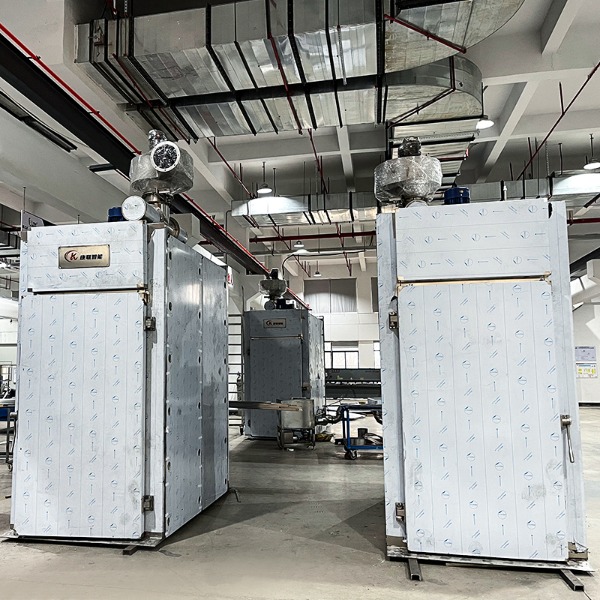
Stainless steel smokehouses, on the other hand, are a more modern innovation, designed for efficiency and versatility. These smokehouses use advanced technology to regulate temperature and airflow, making them ideal for large-scale industrial use.
Advantages:
Disadvantages:
In the modern industrial food sector, efficiency is paramount. Stainless steel smokehouses are designed to optimize space and resources, making them better suited for large-scale operations. They can be equipped with advanced features like adjustable smoking flavor equipment, which allows operators to customize the smoke level, temperature, and humidity.
Traditional wood smokehouses, however, are limited in their capacity and efficiency. They are typically designed for smaller batches, making them less suitable for mass production. Furthermore, the labor-intensive nature of managing a wood fire means that maintaining a steady output can be difficult, especially during busy production times.
| Feature | Traditional Wood Smokehouses | Stainless Steel Smokehouses |
|---|---|---|
| Capacity | Low to Medium | High |
| Temperature Control | Low | High |
| Automation | No | Yes |
| Energy Efficiency | Low | High |
| Flavor Control | Limited | Adjustable |
One of the most significant differences between stainless steel and traditional wood smokehouses is the level of control over the smoking process. Adjustable smoking flavor equipment in stainless steel models allows for precise manipulation of the smoking process, including the type of wood chips or pellets used for flavoring, the temperature, and the humidity. This level of control is essential in ensuring consistent flavor profiles across batches of smoked products.
In contrast, traditional wood smokehouses offer a more organic process. The flavor is dictated by the type of wood used, and while this can be desirable for specific applications, it may not offer the flexibility required in modern industrial food production.
Wood smokehouses require significant maintenance to keep them functioning optimally. The wood needs to be replenished regularly, and the smokehouse must be cleaned thoroughly to prevent the buildup of ash and soot, which can affect the flavor of the smoked food.
Stainless steel models are much easier to maintain. The non-porous nature of stainless steel means that it resists the buildup of contaminants like grease and smoke residue. Additionally, these smokehouses are easier to clean, as they can be wiped down with minimal effort.
The long lifespan of stainless steel makes these smokehouses a more cost-effective investment in the long term, especially for businesses with high-volume production needs.
The upfront cost of a stainless steel smokehouse is significantly higher than that of a traditional wood smokehouse. However, given their efficiency, automation features, and low maintenance needs, stainless steel smokehouses can save money over time by reducing labor costs and increasing output.
Traditional wood smokehouses, while less expensive initially, can incur higher costs in terms of labor, wood procurement, and cleaning. For smaller businesses or those with limited production needs, they may still be a viable option.
Both types of smokehouses have environmental considerations. Traditional wood smokehouses rely on wood, which, if sourced sustainably, can be an eco-friendly option. However, the burning of wood can release particulate matter and carbon into the atmosphere.
Stainless steel smokehouses, with their advanced temperature and smoke control systems, are more energy-efficient and generate less waste. Many modern models are designed with energy-saving features and can run on electric power or use wood pellets, which are a cleaner option than traditional burning methods.
Choosing between a traditional wood smokehouse and a stainless steel smokehouse depends largely on the specific needs of your operation. For small-scale operations focused on producing traditional flavors, a wood smokehouse might be the best choice. However, for large-scale industrial food production, a stainless steel smokehouse offers greater efficiency, better control, and a more consistent output.
If your priority is versatility, automation, and a modern approach to flavor customization, a stainless steel model with adjustable smoking flavor equipment is a clear winner. On the other hand, if you’re looking for a more artisanal approach and don’t mind a bit more labor, the classic wood smokehouse might be more suited to your needs.
1. What is the primary difference between a stainless steel and a traditional wood smokehouse?
The main difference lies in the material and the level of control. Stainless steel smokehouses offer better efficiency, temperature control, and maintenance, while wood smokehouses provide a traditional flavor but require more manual labor.
2. Are stainless steel smokehouses suitable for large-scale industrial use?
Yes, stainless steel smokehouses are ideal for large-scale operations, offering better capacity, automation, and efficiency.
3. Can I achieve a traditional wood flavor in a stainless steel smokehouse?
Yes, many stainless steel smokehouses come with adjustable smoking flavor equipment that allows you to customize the type of smoke and intensity, mimicking the flavor of wood-fired smoking.
4. How easy is it to maintain a stainless steel smokehouse compared to a wood smokehouse?
Stainless steel smokehouses are much easier to maintain due to their durability and ease of cleaning, whereas wood smokehouses require more frequent maintenance and wood replenishment.
5. Is the cost of a stainless steel smokehouse justified for small businesses?
While the initial cost of stainless steel smokehouses is higher, their efficiency and low maintenance make them a worthwhile investment for larger operations. For smaller businesses, a traditional wood smokehouse may still be a cost-effective option.
Introduction: The New Era of Food Defrosting Technology The global demand for frozen food products h......
READ MOREIntroduction to Advanced Food Preservation The evolution of food preservation technology has reached......
READ MOREIntroduction: What Is a Tunnel Freezer? A Tunnel Freezer is a specialized industrial freezing system......
READ MORE1. Introduction In the context of the global food processing industry's continuous growth, food safe......
READ MOREDevelopment Concept
Guided by our core principle of quality, we have always adhered to the business purpose of "starting with pursuit and ending with satisfaction.
 +86-13967365006
 +86-573-82723906
 zhejiangkanglian@gmail.com
 No. 351 Xinfei Road, Fengqiao Town Industrial Park, Nanhu District, Jiaxing City, Zhejiang Province, China
Copyright © 2023 Zhejiang Kanglian Intelligent Equipment Co., Ltd. All Rights Reserved. Privacy Global Technical Support for Custom Food Processing Equipment


