 English
 Español
 عربى
عربى


Frozen foods are essential to modern food processing because they extend shelf life, simplify storage, and preserve product availability across changing supply demands. However, freezing alone does not guarantee product quality. The thawing stage is equally critical, as improper thawing can damage texture, reduce moisture retention, compromise food safety, and weaken product consistency.
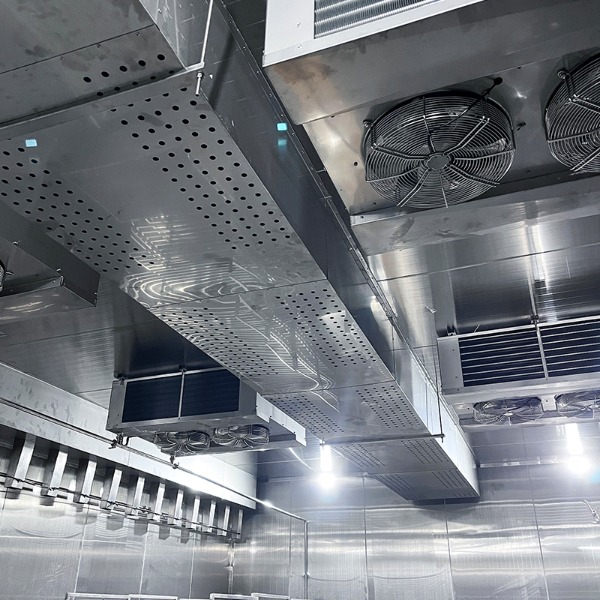
This is where thawing equipment becomes essential. Modern systems are designed to control temperature, humidity, airflow, and timing to ensure that frozen foods return to processing-ready conditions without structural damage. In particular, PLC automated thawing has become an increasingly important technology for maintaining precision and repeatability throughout the thawing cycle.
Understanding the relationship between thawing technology and food quality helps manufacturers improve output standards while reducing waste and operational risk.
Frozen food contains ice crystals formed during the freezing process. During thawing, these crystals melt and release water back into the food structure. If thawing occurs too quickly or unevenly, cell walls may rupture, causing excessive drip loss and poor texture recovery.
Common problems caused by uncontrolled thawing include:
| Quality Issue | Operational Impact |
|---|---|
| Moisture loss | Lower product yield |
| Uneven thawing | Inconsistent processing results |
| Surface overheating | Texture degradation |
| Microbial growth risk | Reduced food safety |
| Structural damage | Lower product appearance quality |
Well-designed thawing equipment minimizes these risks by controlling heat transfer and ensuring gradual temperature equalization throughout the product.
Texture is one of the first quality indicators consumers notice. Whether the product is meat, seafood, poultry, or prepared food, poor thawing can produce dryness, softness, or structural collapse.
Advanced thawing systems work by distributing thermal energy evenly. This avoids overheating the outer surface while the inner core remains frozen.
The benefits include:
By maintaining controlled thawing conditions, processors can ensure that products retain their original physical integrity.
Automation has transformed food processing, and thawing is no exception. PLC automated thawing allows operators to precisely control every stage of the thawing cycle through programmable logic systems.
These systems can regulate:
This precision creates repeatable thawing outcomes across different product categories.
| Function | Quality Benefit |
|---|---|
| Automated cycle control | Consistent thawing results |
| Sensor-based monitoring | Prevents overheating |
| Recipe programming | Adaptable to multiple products |
| Data recording | Easier process validation |
| Reduced manual adjustment | Lower operational error |
The consistency delivered by PLC automated thawing improves process reliability and supports stricter food safety standards.
Food safety depends heavily on temperature control. If products remain too long in unsafe temperature ranges, microbial activity can increase rapidly.
Effective thawing equipment ensures that products move through thawing zones efficiently while avoiding prolonged exposure to critical temperature thresholds.
Important safety protections include:
These functions help maintain compliance with food safety requirements while preserving product freshness.
While product quality is the primary goal, operational efficiency is another major advantage of modern thawing systems.
Improved thawing control helps reduce:
Because PLC automated thawing operates through programmed cycles, facilities can schedule thawing more accurately and integrate it smoothly into production lines.
This creates better workflow coordination between storage, preparation, and packaging stages.
Not all thawing solutions are suitable for every application. Equipment selection should match product type, production volume, and operational goals.
Consider these factors:
Selection FactorWhy It MattersProduct thicknessAffects heat penetrationBatch capacityDetermines throughput efficiencyTemperature control rangeImpacts precisionAutomation levelSupports consistencyCleaning accessibilityEnsures hygiene compliance
Choosing properly designed thawing equipment ensures long-term process stability and protects food quality standards.
The purpose is to restore frozen products to process-ready conditions while preserving texture, moisture, and safety.
It provides precise control, repeatable results, reduced human error, and easier process validation.
Yes. Uneven or excessive thawing can damage structure, increase moisture loss, and reduce product consistency.
Yes. It reduces labor requirements, minimizes processing delays, and improves production scheduling.
Yes. Modern systems can be programmed for meat, seafood, poultry, prepared meals, and other frozen products.
The quality of frozen food depends not only on freezing technology but also on how products are thawed before processing or preparation. Poor thawing can damage texture, reduce yield, and create safety risks.
Modern thawing equipment addresses these challenges through precise environmental control and process consistency. With PLC automated thawing, food processors gain repeatable performance, stronger quality assurance, and better operational efficiency.
Introduction: The New Era of Food Defrosting Technology The global demand for frozen food products h......
READ MOREIntroduction to Advanced Food Preservation The evolution of food preservation technology has reached......
READ MOREIntroduction: What Is a Tunnel Freezer? A Tunnel Freezer is a specialized industrial freezing system......
READ MORE1. Introduction In the context of the global food processing industry's continuous growth, food safe......
READ MOREDevelopment Concept
Guided by our core principle of quality, we have always adhered to the business purpose of "starting with pursuit and ending with satisfaction.
 +86-13967365006
 +86-573-82723906
 zhejiangkanglian@gmail.com
 No. 351 Xinfei Road, Fengqiao Town Industrial Park, Nanhu District, Jiaxing City, Zhejiang Province, China
Copyright © 2023 Zhejiang Kanglian Intelligent Equipment Co., Ltd. All Rights Reserved. Privacy Global Technical Support for Custom Food Processing Equipment


